


Jona Goldschmidt
Position while in office: Prof. Emeritus, Loyola University
2022-Present
Dr. Jona Goldschmidt is a distinguished Professor Emeritus in the Department of Criminal Justice and Criminology at Loyola University Chicago. His academic foundation is multidisciplinary, beginning with a BS in Journalism from the University of Illinois-Urbana (1972), followed by a JD from DePaul University College of Law (1975). He later expanded his expertise by earning a PhD in Justice Studies with a concentration in Dispute Resolution from Arizona State University (1990) and an LLM from the University of Arizona (2022). Throughout his career, Dr. Goldschmidt has held significant administrative and faculty positions, including serving as Assistant Executive Director of the American Judicature Society and as a faculty member at Northern Arizona University before joining Loyola. He is a member of the Illinois and California bars and is admitted to practice before the Supreme Court of the United States.
A prolific scholar, Dr. Goldschmidt is widely recognized for his research on access to justice, judicial ethics, and the rights of self-represented litigants. He has authored several influential books, including Self-Representation: Law, Ethics, and Policy (2022) and User-Friendly Justice: Making Courts More Accessible, Easier to Understand, and Simpler to Use (1996). His work has had a tangible impact on the legal system, and his commitment to user-friendly justice remains a cornerstone of his legacy, advocating for a legal system that is more equitable and navigable for those without legal representation.
Even in retirement, Dr. Goldschmidt remains a vital contributor to the field and the local community. He continues to teach as an adjunct faculty member at Oakton College and volunteers his legal expertise to assist self-represented litigants in the U.S. District Court in Chicago. As a past president of the Illinois Academy of Criminology, he has played a pivotal role in fostering professional development and scholarly exchange within the state’s criminal justice community.
Source:
Loyola University Chicago. (n.d.). Jona Goldschmidt, JD, PhD, LLM: Professor Emeritus. Department of Criminal Justice & Criminology. https://www.luc.edu/criminaljustice/about/facultystaff/aggregatefacultypage/profiles/goldschmidt.shtml

David Ader
Position while in office: Attorney at Law
2019-2021
David Lincoln Ader is a distinguished attorney and a vital figure in the history of the Illinois
Academy of Criminology. A graduate of Northwestern University School of Law (J.D., 1967),
Ader built a robust legal career in Chicago, specializing in appellate practice and the
complexities of the Illinois legal system. His early academic excellence was recognized by the
Illinois State Bar Association when he was awarded the prestigious Lincoln Legal Writing Award
in 1970, a testament to his skill in legal scholarship and clear communication.
Ader’s professional legacy is notably defined by his expertise in environmental law and land use,
perhaps best exemplified by his work in the landmark Berm Highway case in Alton, Illinois.
Representing the Alton Area Landmarks Association (AALA) for over 13 years, Ader successfully navigated complex litigation to prevent the construction of an elevated highway through the city’s historic Riverfront Park. His tenacity in the courtroom was instrumental in preserving the public commons, leading to a masterpiece court order in 1987 that protected the site for future generations.
Throughout his tenure with the Illinois Academy of Criminology, Ader served in multiple
capacities, most notably as its president. His leadership focused on bridging the gap between
legal practice and criminological research. His impact on the legal field is further cemented by
his contributions to professional literature, including authored works such as The Illinois Court
System and the Judicial System in Illinois, which serve as foundational texts for understanding
state-level judicial administration.

Matt Rodriguez
Position while in office: Superintendent (Ret'd) Chicago Police Department
2016-2018
Matthew Louis Rodriguez was a transformative figure in Illinois law enforcement and a dedicated leader within the Illinois Academy of Criminology. Born on April 5, 1936, Rodriguez was a lifelong Chicagoan who attended Holy Trinity High School before embarking on a distinguished career that spanned nearly four decades. He joined the Chicago Police Department in 1959, steadily rising through the ranks while working in diverse divisions, including patrol, criminal investigations, and organized crime. His commitment to professionalizing the field was further reflected in his leadership of the Illinois Academy of Criminology, where he served as president and championed initiatives like the “Transforming the Criminal Justice System” essay contest to engage young scholars in police-community relations.
His major impact on the field is most notably marked by his appointment in 1992 as the first Hispanic Superintendent of the Chicago Police Department. During his tenure, Rodriguez became a national pioneer in community-oriented policing by initiating the Chicago Alternative Policing Strategy (CAPS) in 1993. This model shifted the department's focus toward proactive problem-solving and fostered a collaborative relationship between officers and the residents they served. Beyond his operational roles, he contributed to the academic and professional development of the field as a consultant and instructor, teaching criminal justice courses to the next generation of practitioners after his retirement from the force in 1997.
In addition to his administrative achievements, Rodriguez was recognized for his deep commitment to the city’s social and civic fabric. He served as the Deputy Superintendent of Technical Services for twelve years prior to his top appointment, overseeing critical infrastructure and modernization efforts within the department. His legacy is characterized by his role as a history maker who led through a period of significant transition in urban policing. He passed away on August 30, 2023, at the age of 87, leaving behind a profound influence on the Chicago Police Department and the broader criminological community in Illinois.
Sources:Chicago Sun-Times. (2023, August 30). Matt Rodriguez, first Hispanic Chicago Police superintendent, dies at 87.

Elvis Slaughter
Position while in office: Superintendent
Cook Cty Dept of Corrections (Ret'd)
2009-2010
Elvis Slaughter, MSCJ, is a distinguished criminologist and law enforcement veteran who served as the President of the Illinois Academy of Criminology. With a career spanning over three decades at the Cook County Sheriff’s Office, he rose to the rank of Sheriff’s Superintendent before his retirement. Throughout his tenure at one of the nation’s largest correctional systems, Slaughter became a recognized expert in managing complex inmate populations and improving institutional safety. His leadership extended beyond corrections into community governance, where he served as a Fire and Police Commissioner, consistently advocating for professional standards and evidence-based practices within the justice system.
An accomplished author and researcher, Slaughter has made significant contributions to the field through his published works, including Mentally Ill Inmates & Corrections and Preschool to Prison. His writing draws directly from his frontline experiences, offering critical insights into the cradle-to-prison pipeline and the unique challenges of supervising individuals with severe mental health issues. By analyzing high-profile cases and institutional data, he has provided invaluable resources for law enforcement, educators, and social work professionals seeking to understand the behavioral genesis of crime and the importance of humane rehabilitation.
Slaughter’s academic background is rooted in a Master of Science in Criminal Justice, a foundation that has fueled his post-retirement work as an educator for students from pre-K through 12th grade. Currently a resident of Lansing, Illinois, he remains a vocal advocate for at-risk youth and vulnerable populations within the justice system. His legacy is defined by a commitment to shifting the paradigm of correctional work from mere containment to informed intervention, ensuring that both staff safety and inmate dignity are prioritized in the pursuit of a more effective criminal justice system.
Sources:

Creasie Hairston
Creasie Finney Hairston is a distinguished leader in social work and criminology, particularly recognized for her tenure as the Dean of the Jane Addams College of Social Work at the University of Illinois Chicago. An influential figure in the Illinois Academy of Criminology, Dr. Hairston served as a past president of the organization, where she contributed to its mission of bridging the gap between academic research and criminal justice practice. Her academic journey began with a Bachelor of Science from Bluefield State College, followed by a Master of Science in Social Administration (MSSA) and a Ph.D. from Case Western Reserve University. Throughout her career, she has held significant leadership roles, including serving as the Director of the Jane Addams Center for Social Policy and Research and as the Editor of the Journal of Offender Rehabilitation.
Dr. Hairston is widely credited with shifting the national conversation toward the impact of incarceration on children and families. Her extensive body of work includes seminal articles such as “Family Ties During Imprisonment: Important to Whom and For What?” and “The Forgotten Parent: Understanding the Forces that Influence Incarcerated Fathers’ Relationships.” Her research has consistently highlighted how correctional policies, ranging from prison location strategies to communication regulations, shape family bonds and influence the successful reentry of individuals into their communities. Beyond her academic publications, she has authored critical reports for organizations like the Annie E. Casey Foundation, focusing on kinship care and the unique challenges faced by children of incarcerated parents.
Her accomplishments have garnered significant recognition, including being honored at the 5th Annual Race & Health Equity Awards for her commitment to educational access and social impact. As a scholar-practitioner, Dr. Hairston has not only conducted research but also developed practical family programs for correctional populations, advocating for more humane visiting environments and family-oriented principles within the justice system.
Position while in office: Dean of Social Work, University of Illinois-Chicago
2007-2008

Richard Lindberg
Position while in office:
Author and Historian
2004-2006
Recipient of the
Morris Wexler Award for outstanding contributions to the field of criminal justice and to the Academy ('94)
Richard C. Lindberg is a distinguished Chicago-based author, journalist, and research historian whose work has profoundly shaped the public’s understanding of urban crime, political corruption, and the history of criminal justice in Illinois. Born and raised in Chicago, Lindberg attended William Howard Taft High School before earning both his bachelor’s and master’s degrees from Northeastern Illinois University. Throughout his career, Lindberg has authored or co-authored 20 books, many of which delve into the dark underbelly of Chicago’s past, including The Gambler King of Clark Street: Michael C. McDonald and the Rise of Chicago's Democratic Machine and To Serve and Collect: Chicago Politics and Corruption from the Old Era to the Present.
As a past president of the Illinois Academy of Criminology, Lindberg has been a pivotal figure in bridging the gap between historical scholarship and modern criminal justice practice. His leadership and expertise earned him the Academy’s prestigious Morris J. Wexler Award in 2008, recognizing his significant contributions to the field of criminology through his exhaustive research into organized crime and law enforcement history. Beyond his administrative roles, his impact is visible through his extensive media presence. He has appeared on numerous documentaries for The History Channel, A&E, and the Discovery Channel, serving as a vital voice in explaining the sociopolitical forces that drive urban crime. His work is often cited for its meticulous detail, particularly his definitive histories of Chicago’s ethnic neighborhoods and sports, such as his role as the official team historian for the Chicago White Sox.
In addition to his historical and criminological work, Lindberg is a past president of the Society of Midland Authors and has served as a board member for the Illinois State Historical Society. His memoir, Whiskey Breakfast: My Swedish Family, My American Life, offers a poignant look at his own upbringing on Chicago’s North Side, reflecting the immigrant experience and the personal struggles that often parallel the broader social histories he documents. Still an active writer and historian, Lindberg remains a central figure in the preservation of Chicago’s complex heritage.
Sources:
Evanston Roundtable. (2022, May 16). Levy Lecture: Chicago by gaslight – Rich Lindberg. https://evanstonroundtable.com/2022/05/16/levy-lecture-chicago-by-gaslight-rich-lindberg/
Lindberg, R. C. (n.d.). Biography - Rich Lindberg. Richard Lindberg: Author, Chicago Historian, Crime Writer. https://richardlindberg.net/biography.html
Lindberg, R. C. [richard-lindberg-766775111]. (n.d.). Richard Lindberg [LinkedIn profile]. LinkedIn. Retrieved October 23, 2023, from https://www.linkedin.com/in/richard-lindberg-766775111/
Society of Midland Authors. (n.d.). Richard Lindberg. https://midlandauthors.org/bio-lindberg/
Southern Illinois University Press. (n.d.). Author: Richard C. Lindberg. https://www.siupress.com/author/richard-c-lindberg/

Mary Powers
Position while in office: Citizen's Alert
2003-2004
Recipient of the
Ann O'Brien Stevens Award for Distinguished Contributions to the Field of Criminal Justice by a Woman ('90)
Mary D. Powers was a pioneering civil rights activist and a relentless advocate for police accountability who made significant structural impacts on the criminal justice system in Illinois. Born Mary Downey, she grew up in East Lansing and Flint, Michigan, and earned a degree in sociology from the University of Wisconsin–Madison. Before immersing herself in criminal justice reform, she worked as a counselor at Western Electric and was instrumental in bringing Dr. Martin Luther King Jr. to Winnetka, Illinois, for a historic fair housing speech in 1965. She is best known for her foundational leadership within Citizens Alert, a police watchdog group she helped establish and served as coordinator and board president for decades.
Powers’ impact on the field of criminology was defined by her ability to translate grassroots advocacy into policy reform. Following the 1969 police raid that killed Black Panther leader Fred Hampton, Powers challenged the official police account and dedicated her career to systemic oversight. She spearheaded the successful campaign to abolish the political Cook County Coroner system in favor of a professional Medical Examiner’s Office in 1976 and served on the office’s advisory committee. Furthermore, she was a driving force in opening Chicago Police Board meetings to the public, establishing accountability sessions with superintendents, and advocating for “Protection of Life” policies that restricted the use of deadly force. Her persistence was also crucial in exposing the police torture scandal involving Commander Jon Burge; she was one of the primary petitioners for the appointment of a special prosecutor to investigate the torture allegations.
In addition to serving as president of the Illinois Academy of Criminology, Powers held leadership roles as the Vice President of the Alliance to End Repression and the convener of the National Coalition on Police Accountability (N-COPA). She contributed to the discourse on policing through articles and commentaries, such as “N-COPA: The First Decade” and opinion pieces advocating for crisis intervention training and changes to police pursuit policies. Her lifelong commitment to justice was recognized with numerous honors, including the Jane Addams Justice Advocates Award and her induction into the Chicago LGBT Hall of Fame for her early and sustained advocacy for gay and lesbian rights.
Sources:
Wikipedia. (n.d.). Mary D. Powers. https://en.wikipedia.org/wiki/Mary_D._Powers
Hounmenou, C. (2012). Justice Advocates: Citizens Alert and Police Accountability. UIC Jane Addams Center for Social Policy and Research.
Hounmenou, C. (2012). Justice Advocates: Citizens Alert and Police Accountability Timeline. UIC Jane Addams Center for Social Policy and Research.
Chicago Sun-Times. (2016, June 28). Mary D. Powers, dead at 93, called for police accountability. https://chicago.suntimes.com/2016/6/28/18336682/mary-d-powers-dead-at-93-called-for-police-accountability

Edward Mogul
Position while in office: Attorney at Law
1999-2001
Recipient of the
Executive Director's Distinguished Service Award for significant contribution to IAC by a member
Edward H. Mogul is a distinguished attorney, educator, and a transformative leader within the Illinois Academy of Criminology. His professional journey was marked by a unique blend of legal expertise and a deep commitment to the humanities. He earned his B.A. from Yale College in 1966, followed by a J.D. from the University of Illinois in 1969. Later in his career, demonstrating his lifelong dedication to learning, he completed a Master of Liberal Arts (M.L.A.) in humanities and philosophy from the University of Chicago in 2010.
Mogul's impact on the field of criminal justice was profound, most notably through his advocacy for prosecutorial ethics. He succdessfully proposed to the Illinois Supreme Court's Special Committee on Capital Litigation that the state adopt a new rule for the conduct of prosecutors. Based on the American Bar Association standard, this rule established that the primary duty of a prosecutor is to seek justice, rather than merely to obtain a conviction, a proposal that ultimately became law in Illinois. As a federal trial attorney and a longtime professor at the City Colleges of Chicago, he mentored generations of students. At Wilbur Wright College, he was named a Distinguished Professor in 2011 and founded the "Scholars at Wright" program, which brought the study of "Great Books" to community college students and the broader public.
Beyond his contributions to criminology and education, Mogul was a tireless advocate for the LGBTQ+ community in Chicago, a commitment that led to his induction into the Chicago LGBT Hall of Fame in 2014. He served as the first attorney for the Howard Brown Memorial Clinic, and was an original co-trustee of the Unicorn Foundation, which distributed millions of dollars to AIDS-related charities. His scholarly work and public service were characterized by a firm belief in the intersection of law, ethics, and the human condition.
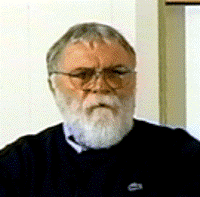
Jess Maghan
Position while in office: Professor, University of Illinois-Chicago
1996-1997
Recipient of the
Hans Mattick Award for outstanding accomplishments in the field of criminology and criminial justice research. ('96)
Jesse L. Maghan was a distinguished scholar, administrator, and international authority in the field of criminal justice. He served as the President of the Illinois Academy of Criminology and was honored by the Academy in 1996 with the Hans W. Mattick Award for his outstanding contributions to criminology and criminal justice research. His career was marked by a unique bridge between high-level practical administration and rigorous academic inquiry. He held several prominent executive roles, including Director of Training for the New York City Police Department, Commissioner for Training for the New York City Department of Correction, and Superintendent of the Illinois Correction Academy.
His academic impact was equally significant through his role as an Associate Professor of Criminal Justice and Executive Director of the Center for Research in Law and Justice at the University of Illinois at Chicago (UIC). During his tenure at UIC, he also directed the Forum for Comparative Corrections, where he led international initiatives to develop comparative correctional programs in countries such as Hungary, the Czech Republic, China, Romania, and South Africa. His scholarly work focused on institutional violence, occupational socialization of officers, and the global politics of hate crimes. He co-authored and edited influential texts, including Hate Crime: The Global Politics of Polarization (1998) and Illicit Trafficking: A Reference Handbook (2005).
Born in 1936, he pursued an extensive education, earning a Bachelor of Arts from Barton College in 1963 and a Master of Arts in Education from the University of North Carolina at Chapel Hill in 1964. He later advanced his specialization with a Master of Criminal Justice and a Doctor of Philosophy in Criminal Justice from the Graduate School of the City University of New York (CUNY) in 1988. Beyond his professional achievements, he was a deeply involved member of the Chester, Connecticut community for many years. He passed away on November 30, 2020, leaving a legacy of international reform and a commitment to understanding the human and social dynamics of the justice system.
Connecticut Cremation Service. (2020). Jesse L. Maghan (1936–2020). https://www.connecticutcremations.com/obituary/Jesse-Maghan
Maghan, J., & Kelly, R. J. (Eds.). (1998). Hate crime: The global politics of polarization. Southern Illinois University Press.Maghan, J. (2005). Illicit trafficking: A reference handbook. ABC-CLIO.

Pattie Banas
Position while in office: Sergeant Cook County Sheriff's Police Department, Ret'd; Director Sussex Management Associates
1994-1995
Recipient of the
Ann O'Brien Stevens Award for Distinguished Contributions to the Field of Criminal Justice by a Woman ('94)
Pattie D. Banas has been an integral part of the Illinois Academy of Criminology for decades, exemplifying her dedication to the mission of the organization to facilitate communication between academics and practitioners in the field of criminal justice. Pattie Banas is not only a past president of the organization but is also currently serving as the Academy’s Treasurer as well as a member of its Board of Directors. Her professional leadership extends beyond the Academy as the Executive Director of Sussex Management Associates, where she has applied her extensive expertise in organizational management and criminal justice administration to influence policy and practice throughout Illinois.
Throughout her distinguished career, Banas graduated from DePaul University, worked in the Special Investigations section of the Cook County States Attorney's Office, as a Patrol Sergeant with the CC Sheriff's Police, and as a Staff Officer at the First National Bank of Chicago-Corporate Investigations Section. She served as founding member and Past President of the Financial Crimes Association. She focused on the intersection of management and criminology, often bridging the gap between theoretical research and practical application. Her work with Sussex Management Associates involved high-level consultation and executive leadership, contributing to the development of efficient and ethical criminal justice standards. Within the Illinois Academy of Criminology, her long-standing tenure in the leadership circle saw her manage the Academy’s fiscal health and organizational growth, ensuring that the IAC remains a vital platform for addressing contemporary issues in crime and justice.
Banas’s academic and professional background is rooted in the Midwest, and she has remained a dedicated advocate for the Illinois criminal justice community. Her career is characterized by her ability to facilitate collaboration among diverse stakeholders, including law enforcement and legal professionals, as well as academic researchers.

David Struckoff
Position while in office: Professor, Criminal Justice Dept., Loyola University
1983-1984
Recipient of the
Hans Mattick Award for outstanding accomplishments in the field of criminology and criminial justice research. ('81)
Recipient of the
Morris Wexler Award for outstanding contributions to the field of criminal justice and to the Academy ('94)
David R. Struckhoff (1942–2009) was a distinguished scholar, educator, and a prominent leader within the Illinois Academy of Criminology. Born on August 16, 1942, in St. Louis, Missouri, he dedicated over three decades to the field of criminal justice. He earned his bachelor's degree in sociology from Quincy University, followed by a master's degree in social psychology from the Illinois Institute of Technology. He later completed his Ph.D. in social psychology and criminology at Southern Illinois University. Throughout his career, he was known for his deep commitment to education, serving as an associate professor at Loyola University Chicago for more than 31 years, where he was highly regarded as a mentor and an enthusiastic instructor who inspired countless students to pursue careers in the legal and criminal justice fields.
In addition to his academic tenure, he held several influential leadership positions. He served as the President of the Illinois Academy of Criminology and was later named President Emeritus and Executive Director of the Justice Research Institute. His professional reach extended globally through international consulting and programs focused on the cultural variations of justice. Early in his professional life, he served as a behavioral diagnostic specialist for the Illinois prison system and was a Graduate Research Fellow for the U.S. Department of Justice. A prolific writer and researcher, he authored the seminal work The American Sheriff (1994) and edited several editions of Annual Editions: Juvenile Delinquency and Justice. His contributions to the field were recognized by his induction into various honor societies, including Alpha Sigma Phi and Phi Beta Delta.
His legacy is defined by his passion for bridging the gap between academic theory and practical application in criminal justice. Beyond his research on the office of the sheriff and juvenile delinquency, he was an active member of his community, volunteering for the Will County Forest Preserve and participating as a Third Degree member of the Knights of Columbus. He passed away on September 20, 2009, leaving behind a lasting impact on the Illinois Academy of Criminology and the wider criminological community through his scholarship, leadership, and the generations of students he mentored.
Sources:
https://www.chicagotribune.com/obituaries/david-struckhoff-il/
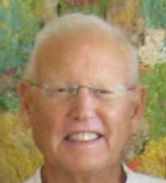
Gad Bensinger
Position while in office: Professor, Criminal Justice Dept., Loyola University
1978-1979
Recipient of the
Morris Wexler Award for outstanding contributions to the field of criminal justice and to the Academy ('82)
Recipient of the
Hans Mattick Award for outstanding accomplishments in the field of criminology and criminial justice research. ('87)
Gad Bensinger (1938-2011) was a distinguished educator and scholar who dedicated over three decades to the field of criminal justice. Born in Holon, Israel, on April 1, 1938, Bensinger eventually moved to the United States, where he established a long and impactful academic career in Chicago. He earned his PhD and became a cornerstone of the criminal justice program at Loyola University Chicago. Over his 34-year tenure at Loyola, he served with distinction as a professor and as the Chair of the Department of Criminal Justice, where he was known for inspiring countless students to pursue careers in public service and law enforcement. Beyond his leadership at Loyola, Bensinger was deeply involved in the professional criminal justice community in Illinois. He served as the President of the Illinois Academy of Criminology, contributing his expertise to the advancement of criminological research and practice within the state.
Bensinger was a prolific writer whose scholarship significantly advanced the study of international and comparative criminal justice. One of his most notable works, Justice in Israel: The Criminal Justice System, remains a key text for understanding the evolution of the Israeli legal system, from its British Mandate roots to its modern-day operations. His ability to bridge his Israeli heritage with his American academic career allowed him to provide unique, cross-cultural perspectives on policing and judicial processes. In addition to his focus on international systems, he contributed extensively to the professionalization of the field through works like Criminal Justice: A Community Relations Approach. His articles often appeared in prominent journals, covering diverse topics such as crime prevention, law enforcement administration, and the role of the community in the justice process. These publications reflected his belief that criminal justice was not just a matter of law, but a vital component of social community health.
Bensinger’s legacy is characterized by his commitment to academic excellence and his mentorship of future generations. Following his passing on April 19, 2011, his contributions were honored by establishing the Gad J. Bensinger Criminal Justice Excellence Award and Scholarship Fund at Loyola University Chicago. This fund continues to support students who mirror his dedication to social justice.
Chicago Tribune. (n.d.). Gad J. Bensinger. https://www.chicagotribune.com/obituaries/gad-j-bensinger-il/
Geni. (n.d.). Gad Bensinger. https://www.geni.com/people/Gad-Bensinger/6000000007049902114
Loyola University Chicago. (2026). 2025 CJC graduates and awards. Department of Criminal Justice & Criminology. https://www.luc.edu/criminaljustice/about/2025cjcgraduatesandawards/
Seymour Adler
Position while in office: Director of Youth Guidance
1971-1972
Recipient of the
Morris Wexler Award for outstanding contributions to the field of criminal justice and to the Academy ('75)

Seymour J. Adler was a distinguished leader in the field of criminology and social services, serving as a past president of the Illinois Academy of Criminology. A Chicago native and a veteran of the U.S. Army during World War II, Adler’s career was defined by a deep commitment to systemic reform and human welfare. He earned his Master’s degree from the University of Chicago’s School of Social Service Administration, a foundation that allowed him to bridge the gap between social work principles and the practicalities of the legal system.
Adler’s most significant impact on the field occurred during his long tenure as Chief Probation Officer for the United States District Court, Northern District of Illinois. In the late 1960s and early 1970s, he spearheaded the pioneering “Aide Project” (the Probation Officer Assistant Research Project). This innovative program utilized indigenous case aides and ex-offenders to assist in community supervision, effectively demonstrating that paraprofessionals could improve communication and rehabilitative outcomes within the federal court system. His work was instrumental in shifting the focus of probation toward a more inclusive and community-based model.
Following his federal service, Adler continued his leadership as the Director of the Kenosha County Department of Human Services. Throughout his life, he remained a respected voice in the Chicago criminological community. A longtime resident of Twin Lakes, Wisconsin, Adler’s legacy at the Illinois Academy of Criminology is remembered for his ability to merge rigorous research with compassionate practice, ensuring the Academy remained a vital forum for justice reform.
Gerald B. Gersey
Position while in office: Crime Prevention Specialist, Illinois Law Enforcement Commission
1973-1974
Gerald B. Gersey
Michael Spiotto
Position while in office: Chief of Detectives, Chicago PD
1968-1969
Michael Spiotto (1914–2004)
President of the Illinois Academy of Criminology: 1968–1969
Michael A. Spiotto was a distinguished law enforcement leader and a pivotal figure in the Illinois
Academy of Criminology, where he served as President and was honored as "Man of the Year."
Born on January 31, 1914, in Salerno, Italy, Spiotto immigrated to the United States and spent
much of his life in Chicago’s Edison Park neighborhood and later Mount Prospect. He was a
veteran of the U.S. Army during World War II and dedicated his civilian life to public service,
earning a degree from Loyola University and a Master’s in Public Administration from the
Illinois Institute of Technology in 1967. He furthered his expertise through the management
development program at the University of Illinois Circle Campus, grounding his practical
experience in rigorous academic study.
Spiotto’s career with the Chicago Police Department spanned thirty-five years, beginning in
1943. He rose through the ranks with a focus on investigative excellence, serving as a Juvenile
Officer in the Crime Prevention Bureau and later as a Detective Commander overseeing citywide
burglary investigations. His leadership was instrumental during high-profile cases, including the
investigation into the Peterson-Schuessler homicides. By 1969, he was named Chief of
Detectives, eventually ascending to the role of First Deputy Superintendent in 1974. He
concluded his storied career as the Acting Superintendent of the Chicago Police Department in
1977, leaving behind a legacy of integrity and reform that earned him the Superior Public
Service Award in 1976.
Beyond his operational roles, Spiotto’s impact on the field of criminology was defined by his
commitment to professional ethics and systematic oversight. After retiring from the police force
in 1978, he served as the chairman of the Board of Professional Review, where he oversaw
investigations into city employee misconduct. His dual perspective as a high-ranking practitioner
and an academic contributor allowed him to bridge the gap between street-level policing and
criminological theory. Throughout his life, he remained an active member of numerous
professional organizations, including the International Association of Chiefs of Police and the
Illinois Police Association, consistently advocating for the advancement of criminal justice
standards in Illinois.
Sources:
Daily Herald. (2004, January 31). Michael Spiotto obituary (1914–2004) - Mount Prospect, IL.
Legacy.com.
https://www.legacy.com/us/obituaries/dailyherald/name/michael-spiotto-obituary?
id=30133406

Norval Morris
Position while in office: Director Ctr for Studies in Crim Justice, Univ of Chicago Law School
1967-1968
Recipient of the
Norval Morris Award for Meritorious Achievement Award for outstanding efforts to proote justice and correct injustice in the criminal justice system ('75)
Norval Morris was a preeminent legal scholar and criminologist who served as a central figure in the Chicago criminal justice community for four decades. Born in Auckland, New Zealand, he was raised in Australia and served in the Australian Army during World War II. He completed his LL.B. (1946) and LL.M. (1947) at the University of Melbourne before earning a Ph.D. in law and criminology from the London School of Economics in 1949. After a distinguished early career establishing criminology departments in Australia and Japan, Morris joined the University of Chicago Law School faculty in 1964. He became a pillar of the university, serving as the inaugural Julius Kreeger Professor of Law and Criminology and later as the 7th Dean of the Law School from 1975 to 1978.
Morris was a visionary reformer who believed that empirical research should drive humanitarian shifts in the legal system. At the University of Chicago, he founded the Center for Studies in Criminal Justice in 1965, which became a hub for innovative research on prison and police reform. His leadership extended to the Illinois Academy of Criminology, where he served as a past president, further bridging the gap between high-level scholarship and local policy. Nationally, he was a driving force behind the creation of the National Institute of Corrections, a federal agency designed to assist state and local prison systems. His practical influence was so profound that his proposed prison reforms were implemented by the federal Bureau of Prisons at a new penitentiary in Butner, North Carolina.
A prolific and eloquent writer, Morris authored or co-authored 15 books and hundreds of articles. His seminal works include The Honest Politician's Guide to Crime Control (1970), The Future of Imprisonment (1974), and Between Prison and Probation (1990), the latter of which is considered one of the most-cited works in the field. He also co-founded Crime and Justice: A Review of Research, widely regarded as the world’s leading criminology journal. Beyond traditional scholarship, Morris famously used “parables” and fiction—such as The Brothel Boy (1992)—to explore complex legal and ethical dilemmas.
Sources:
The University of Chicago Law School. Norval Morris Biography & Images. https://chicagounbound.uchicago.edu/norval_morris_images/

Hans Mattick
Position while in office: Director, Chicago Youth Development Project
1959-1960
Hans W. Mattick was a distinguished criminologist and social reformer whose work deeply influenced the study of urban crime and the correctional system in Illinois. Born in Germany, Mattick immigrated to the United States as a child and grew up in Chicago. He earned both his B.A. (1948) and M.A. (1956) in sociology from the University of Chicago. His early life was marked by service in the U.S. Army during World War II, an experience that preceded his long-standing commitment to social justice. Mattick eventually became a professor of criminal justice and director of the Center for Research in Law and Justice at the University of Illinois Chicago (UIC), where he solidified his reputation as a researcher who bridged the gap between academia and public policy.
Mattick is best known for his unflinching analysis of the “Illinois jail system” and his advocacy for prison reform. One of his most significant works, The Unexamined Death: An Analysis of Capital Punishment, provided a critical analysis of capital punishment, while his extensive study of the Cook County Jail highlighted systemic failures in local corrections. He also served as the director of the Chicago Youth Development Project, where he applied sociological theories to gang intervention and delinquency prevention. His major accomplishments include his leadership at the Center for Criminal Justice at the University of Chicago and later his pivotal role at UIC, where he mentored a generation of scholars in the “Chicago School” tradition of urban research.
Beyond his research, Mattick held several influential positions, including serving as the president of the Illinois Academy of Criminology and as a consultant to the President’s Commission on Law Enforcement and Administration of Justice. He was a frequent contributor to journals like the Journal of Criminal Law and Criminology and co-authored several influential reports on the sociopolitical roots of urban riots during the 1960s. Known for his wit and moral clarity, Mattick's impact on the field was defined by his belief that criminology should not just observe the world, but actively work to make the legal system more humane and effective.
Sources:
UIC Department of Criminology, Law and Justice. (n.d.). Hans W. Mattick Award. https://clj.uic.edu/our-research/center-for-research/hans-w-mattick-award/
University of Chicago Law School. (1978). Hans W. Mattick (1920–1978). The Law School Record, 24(2). https://chicagounbound.uchicago.edu/lawschoolrecord/6/.

Fred Inbau
Position while in office: Professosr of Law, Northwestern University
1951-1952
Fred Edward Inbau (1909–1998) was a towering figure in the fields of American criminology
and forensic science. Born and raised in New Orleans, Louisiana, Inbau earned his Bachelor of
Science in 1930 and his LL.B. in 1932 from Tulane University, where he served as editor-in-
chief of the Tulane Law Review. He then moved to Chicago to pursue advanced legal studies at
the Northwestern University School of Law, receiving his LL.M. in 1933. This move established
a lifelong connection to Northwestern, where he would eventually spend decades as a professor and be honored as the John Henry Wigmore Professor of Law.
Throughout his distinguished career, Inbau held several high-profile positions that bridged the
gap between academic theory and practical law enforcement. He served as the Director of the
Scientific Crime Detection Laboratory from 1938 to 1941 and was a founding member of the
Americans for Effective Law Enforcement (AELE) in 1966. His leadership was widely
recognized across professional organizations; notably, he served as the President of the Illinois Academy of Criminology from 1951 to 1952. He also held the presidency of the American Academy of Forensic Sciences (1955–1956) and served as the Editor-in-Chief of the Journal of Criminal Law and Criminology for many years, helping to shape the scholarly discourse of the era.
Inbau’s impact on the criminal justice system is perhaps most visible through his prolific writing and the development of the “Reid Technique” of interrogation. He co-authored the landmark textbook Criminal Interrogation and Confessions, which remains one of the most influential manuals in police training worldwide. Over his career, he wrote 18 books and more than 50 journal articles, focusing on scientific evidence, lie detection, and criminal procedure.
While he was a prominent scholarly critic of the Miranda v. Arizona decision, believing it placed undue burdens on police efficiency, he was equally dedicated to the professionalization of law enforcement. He advocated for a scientific and civilized approach to policing, consistently teaching that interrogation tactics must never risk inducing a confession from an innocent person.
Sources: Wikipedia. (2024, May 22).
https://en.wikipedia.org/wiki/Fred_E._Inbau
Northwestern University Archives. (n.d.).
Fred E. Inbau (1909-1998) Papers, 1933-1996.
Chicago Collections.
https://explore.chicagocollections.org/ead/northwestern/78/610w60t/
Prabook. (n.d.).

Ernest Burgess
Position while in office: Chair of Dept of Sociology, University of Chicago
1950-1951
Professor Burgess was among the founding organizers of the Academy. In 1948, in Paris, France, he proposed the creation of the Illinois Academy of Criminology to the International Congress of Criminology. The proposal was accepted and on 21 May 1951, the Academy held its first meeting.
Ernest Watson Burgess, was a towering figure in American sociology and a pivotal leader in the early development of criminology in Illinois. He participated in the Organzing Committee and became it's first President in 1950.
Born in Tilbury, Ontario, and raised in Oklahoma, Burgess earned his B.A. from Kingfisher College in 1908, then pursued graduate studies at the University of Chicago, where he received his Ph.D. in 1913. After teaching at several Midwestern universities, he returned to the University of Chicago in 1916. As a faculty member for over five decades, he eventually served as the chairman of the Department of Sociology (1946–1952). His leadership extended beyond the classroom as a past president of the Illinois Academy of Criminology, where he helped bridge the gap between academic theory and the practical administration of justice in the Chicago area.
Burgess is perhaps most renowned for his collaboration with Robert E. Park in developing the “Concentric Zone Model” of urban growth, featured in their seminal 1925 book, The City. This model revolutionized criminology by shifting focus away from individual biology toward the social and environmental factors of urban life, specifically identifying “zones in transition” as areas of high social disorganization and crime. His work provided the theoretical foundation for the Chicago School of Criminology and influenced decades of research into urban ecology and delinquency. Beyond urban theory, Burgess was a pioneer in parole prediction, developing early actuarial methods to assess the success of rehabilitated individuals, a contribution detailed in his 1928 work, Factors Determining Success or Failure on Parole.
Throughout his distinguished career, Burgess held numerous positions, including serving as the 24th president of the American Sociological Association in 1934 and president of the Sociological Research Association in 1942. He was also a prolific author; his 1921 textbook, Introduction to the Science of Sociology, became so influential that it was known as the “Bible of Sociology.” His legacy at the Illinois Academy of Criminology and the University of Chicago remains a testament to his belief that empirical social science should be used to improve community safety and social welfare.
Sources:
American Sociological Association (ASA): Ernest Watson Burgess (Past Presidents Biographical Series). https://www.asanet.org/ernest-w-burgess/
University of Chicago Library: Guide to the Ernest Watson Burgess Papers. https://www.lib.uchicago.edu/e/scrc/findingaids/view.php?eadid=ICU.SPCL.BURGESSADDENDA
Chestert Kulis
Position while in office: US Prob & Parole Ofc, No Dist of IL
1990-1991

Chester Kulis
Bio in development
Robert Lombardo
Position while in office: Professor, Loyola University
2010-2011
Recipient of the
Morris Wexler Award for outstanding contributions to the field of criminal justice and to the Academy ('98)
and
Executive Director's Distinguished Service Award for significant contribution to IAC by a member

Robert M. Lombardo served as a law enforcement officer for 33 years with the Chicago Police department and Deputy Chief of the Cook County Sheriff's Police. He is a Professor Emeritus at Loyola University.
He received his B.A. in Criminal Justice and a Ph. D. in Sociology from the University of Illinois-Chicago.
He has authored numerous articles and papers focusing on the history of organized crime in Chicago and published "A History of Law Enforcement Efforts in Chicago.

Scott M. Levin
University of Illinois-Champaign BS Business Administration
University of Illinois-Champaign MA Public Administration
Chicago Kent College of Law-JD
Mayor of Elmhurst, Il
Bio in development
Arthur Lurigio
Position while in office: Dean, Loyola University
2013-2016
Recipient of the
Hans Mattick Award for outstanding accomplishments in the field of criminology and criminal justice research. ('03)

Arthur Lurigio, Dean of Faculty, Loyola University
Bio in development
He continues his close relationship with the Academy by participating in the presentation of webinars and panel discussions of issues relating to cutting edge issues in criminal justice. His latest webinar entitled "Challenges for the Crimminal Justice Community: Legalized Concealed Carry.
Kenneth M Dooley
Position while in office: Chicago Police Department
1997-1998

Kenneth Michael Dooley, Ph. D., (1931-2017)
Retired Chicago Police Department, detedtive with youth division of CPD, President of the Fraternal Order of Police for 20 years
Served as IAC Historian
\
Harold Hayden
Position while in office: President Intramark, Inc.
2002-2003

Harrold Hayden
Executive Director of Volunteer Committees for the American Police Center & Museum.
Graduated Millikin University and DePaul University
President of Intramark, Chicago
Bio in development
John J. Jemilo
Position while in office:
1st Deputy Superintendent
Chicago Police Department
1984-1985
Recipient of the
Morris Wexler Award for outstanding contributions to the field of criminal justice and to the Academy ('87)

John J. Jemilo
Photo unavailable
Hon. Jacob-Braude
1950-1951
Position while in office:
Municipal Court of Chicago
Originally Judge Braude was a member of the Chicago Academy of Criminology and became the first founding President of the Academy. On 21 May 1951, the Academy held its first meeting.
Served on the Organizing Committe of the Academy in 1950. He became President in 1954.
Samuel Sublett, Jr. 1928-2012
Retired from Illinois Department of Corrections as Accreditation Manager and is
honored bi-annually by the Department with the Samuel Sublet Jr. Award
Served as Superintendent, Illinois State Training School for Boys
Bio in development
No Photo Available
Samuel Sublett
Position while in office:
IL Training School for Boys,
Superintenent, St. Charles, IL
1970-1971
No Photo Available
Edward Stulken
Position while in office:
Principal, Montefiore School, Chicago
1954-1955
Edward J. Stulken
Served on the Organizing Committee of the Academy in 1950
Bio in development
No Photo Available
John P. Walsh
Position while in office: Chicago State University
2008-2009
John P. Walsh
Bio in development
No Photo Available
Francis Allen
Position while in office:
Professor, University of Chicago Law School
1961-1962
Francis (Fred) A. Allen
Bio in development
No Photo Available
Arthur Hartman
Position while in office:
Assistant Director
Psychiatric Institute of the Municipal Court, Chicago
1955-1956
A. Arthur Hartman
Served in the US Army Air Corps; a clinical psychologist who testified in the trial of serial killer John Wayne Gacey; graduated from Harvard University , served as Ambassador to France under Jimmy Carter and was Washington's longest-service ambassador to the Soviet Union.
Bio in development
No Photo Available
Solomon Kobrin
Position while in office:
Institute for Juvenile Research
1960-1961
Solomon Kobrin
Bio in development
No Photo Available
Ben Meeker
Position while in office:
Chief, US Probation & Parole, Northern District of Illinois
1956-1957
Recipient of the
Morris Wexler Award for outstanding contributions to the field of criminal justice and to the Academy ('79)
Ben S. Meeker
Bio in development
No Photo Available
Edward Kelleher
Position while in office:
Director, Psychiatric Institute
Municipal Court of Chicago
1953-1954
Edward J. Kelleher, M.D.
Bio in development
No Photo Available
Eugene Zemans
Position while in office:
Director, John Howard Assn.
1958-1959
Eugene S. Zemens
Served on the Organizing Committee of the Academy in 1950 and elected to the first Executive Committee in 1951
No Photo Available
Henry McKay
Position while in office:
Chairman, Sociology Dept.
Institute for Juvenile Justice
1957-1958
Henry D. McKay
No Photo Available
Daniel Glaser
Position while in office:
Chairman, Dept. of Sociology
University of Illinois-Chicago
1964-1965
Daniel Glaser
Bio in development
No Photo Available
Charles Shireman
Position while in office:
Professor, School of Soc Serv
University of Chicago
1962-1963
Charles H. Shireman
Bio in development
No Photo Available
Harold Finestone
Position while in office:
Sociologist
Institute for Juvenile Researh
1963-1964
Harold Finestone
Bio in development
No Photo Available
Morris Wexler
Position while in office:
Attorney at Law
1965-1966
Morris J. Wexler
Bio in development
No Photo Available
Russell Hogrefe
Position while in office:
Director,
Chicago Youth Centers
1966-1967
Russell Hogrefe
No Photo Available
Samuel Sublett
Position while in office:
Professor, Jane Addams Grad School of Social Work
University of Illinois-Chicago
2010-2011
Harvey Treger
Bio in development
No Photo Available
Charles Kehoe
Position while in office: Asst. Executive Director
Charles Howard Association
1972-1973
Charles J. Kehoe
Bio in development
No Photo Available
G. Fredrick Allen
Position while in office: Dep Ch; US Probation an Parole, No Dist of IL
1993-1994
Recipient of the
Hans Mattick Award for outstanding accomplishments in the field of criminalogy and criminal justice research. ('94)
G. Fredrick Allen
Bio in development
No Photo Available
Mel Wallace
Position while in office: Coordination of Chriminal Justice, McHenry Cty College
1991-1992
Mel Wallace (02.20.31-01.28.17)
Bio in development
No Photo Available
David Laske
Position while in office: Chicago Public Schools
Administrator
1995-1996
Recipient of the
Morris Wexler Award for outstanding contributions to the field of criminal justice and to the Academy ('79)
David Laske
Bio in development
No Photo Available
Gerald Gersey
Position while in office: Crime Prevention Specialist, ILEC
1973-1974
Gerald B. Gersey
Bio in development
No Photo Available
Renee Toomey
Position while in office: Dir, DuPage Children's Ctr, CCSAO
1989-1990
Recipient of the
Morris Wexler Award for outstanding contributions to the field of criminal justice and to the Academy ('88)
Renee Toomey
Bio in development
No Photo Available
Christine Nowacki
Position while in office: Assoc Dean, University of Illinois-Chicago
1998-1999
Christine Nowacki
Bio in development
No Photo Available
Joseph Lohman
1952-1953
Position while in office: Chairman, Ill Parole B; Prof Sociology, Univ. of Chicago
Joseph D. Lohman
Bio in development
No Photo Available
Louis Martinez
2011-2013
Position while in office: Chicago Police Dept., Ret'd
Louis Martinez
Bio in development
Photo unavailable
Dennis Drahos
2000-2001
Position while in office:
Chief
Cook County IL Dept of Correctionsf
Dennis Drahos
Photo unavailable
John T. Carey
1985-1986
Position while in office:
Asst. Public Defender,
Cook County Illinois
John T. Carey
Photo unavailable
Sidney E. Sullivan
1982-1983
Position while in office:
Exec. Asst,. Social Service
Cook County Circuit Court
Sidney E. Sullivan
Photo unavailable
Leonard Goodman
Position while in office:
Guardian Ad Litem
Juvenile Court Cty Sheriff's Ofc. 1980-1981
M. Leonard Goodman
No Photo Available
Edward Tromanhauser
1974-1975
Position while in office:
Professor, Loyola University
Recipient of the
Morris Wexler Award for outstanding contributions to the field of criminal justice and to the Academy ('77)
Recipient of the
Hans Mattick Award for outstanding accomplishments in the field of criminology and criminal justice research. (''82)
Photo unavailable
John Troike
1975-1976
Position while in office:
Director, Spec. Projects
Chicago Youth Centers
John A. Troike
Photo unavailable
Patricia C. Siebert
1981-1982
Position while in office:
Dir of Special Projects
Cook County Sheriff's Office
Patricia C. Siebert
Photo unavailable
Patrick Delfino
1976-1977
Position while in office:
Dir. of Training, Planning & Special Projects Div.,
Cook Cty. IL States Atty. Ofc.
Patrick J. Delfino
Photo unavailable
Michael Mahoney
1977-1978
Position while in office:
Director, John Howard Assn.
Recipient of the
Morris Wexler Award for outstanding contributions to the field of criminal justice and to the Academy
Michael J. Mahoney
Photo unavailable
James Gramenos
1979-1980
Position while in office:
Asst. Public Defender,
Ofc. of Cook Cty Pub Defender
Recipient of the
Morris Wexler Award for outstanding contributions to the field of criminal justice and to the Academy
James N. Gramenos
Photo unavailable
Marshall Hartman
1986-1987
Position while in office:
Public Defender, Lake County IL
Recipient of the
Morris Wexler Award for outstanding contributions to the field of criminal justice and to the Academy
Marshall J. Hartman
Photo unavailable
Douglas Thomson
2006-2007
Position while in office: Professor,
Chicago State University
Recipient of the
Hans Mattick Award for outstanding accomplishments in the field of criminology and criminial justice research. ('85)
Douglas Thomson,
Founder, Justice Not Prisions at Chicago State University
Professor of Criminal Justice and Sociology, Ph.D. University of Illinois-Chicago
Loyola University of Chicago
Disciplines Law and Legal Studies-Peace & Conflict Studies onflict Resolution
Photo unavailable
George Knox
1992-1993
Position while in office: Professor, Dept of Criminal Justice, Chicago State Univ.
Recipient of the
Hans Mattick Award for outstanding accomplishments in the field of criminology and criminial justice research. ('95)
George Knox
is the founder and director of the National Gang Crime Research Center is an internationally recognized authority on gangs. He is the author of An Introduction to Gangs, Gangs and Organized Crime, and numeous papers
Photo unavailable
Herbert Scott, Jr.
1987-1988
Position while in office:
Professor, Chicago State University
Herbert Scott, Jr.
Photo unavailable
Harvey Treger
1969-1970
Position while in office:
Professor, Jane Addams Graduate School of Social Work, Univ. of IL-Chgo